
“Why Did My Father Die?”—Screening Report of “X Years Later 2”
In March, screenings of the “X Years Later” documentary series, by Hideaki ito, were held across Japan.
In 1954, the United States conducted hydrogen bomb tests at Bikini Atoll. Although many Japanese fishing boats were operating in the same waters, the radiation exposure of vessels other than the Daigo Fukuryu Maru was almost erased from history.
“So that what happened is not treated as if it never happened.”
The “X Years Later” series uncovers these buried truths and records the voices of fishermen in Kochi Prefecture, preserving them on film.
On March 15 (Sunday), a screening of X Years Later 2 was held at the Toyama Lifelong Learning Center Hall in Shinjuku, Tokyo (hosted by the Shinjuku Women’s Article 9 Association). Instead of the director, the film’s central figure, Misao Kawaguchi, who lives in Tokyo, gave an after-talk.
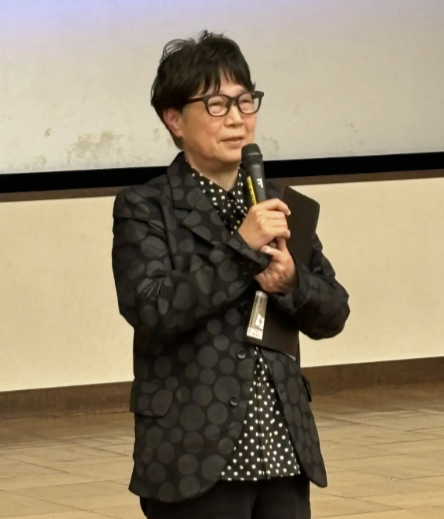
During the post-screening talk, Ms. Kawaguchi shared how she met Director Ito.”
What Sparked It: Watching the First Film During a Visit Home
Ms. Kawaguchi, who runs an advertising agency in Tokyo, returned to her hometown of Muroto City in Kochi in the summer of 2013.
Before flying back to Tokyo on August 16, her younger sister invited her to see a film:
“Hey, there’s a movie today about the local fishermen—want to go?”
That film was X Years Later.
“I had always believed that only the Daigo Fukuryu Maru was exposed to radiation during the Bikini tests. So I was shocked. Tuna fishing boats from all over Japan—including those registered in Kochi—had been exposed.
My father was a tuna fisherman. I was born and raised in Muroto as a fisherman’s daughter, yet I had never heard this before.
I was also struck that someone had made such a documentary—especially a TV director from Ehime who traveled all the way to Kochi to investigate. But as shown in the film, he wasn’t welcomed—he was yelled at and told to leave.
Despite that, he persisted and completed the film. I wanted to meet the director. I was told there would be a screening in Tokyo that fall, and I was introduced to him.”
Feeling that, as someone from Muroto, she might help with the difficult interviews, Kawaguchi offered her cooperation—and work on the sequel began.
But it wasn’t easy.
“Even when I visited the fishermen’s homes, they said things like, ‘It’s too late now—what’s the point of talking?’ and turned me away.
Still, I kept going back, and little by little, they began to talk.”
As she built trust, the deep struggles these fishermen carried began to surface.
Fear of Marriage and Future Generations
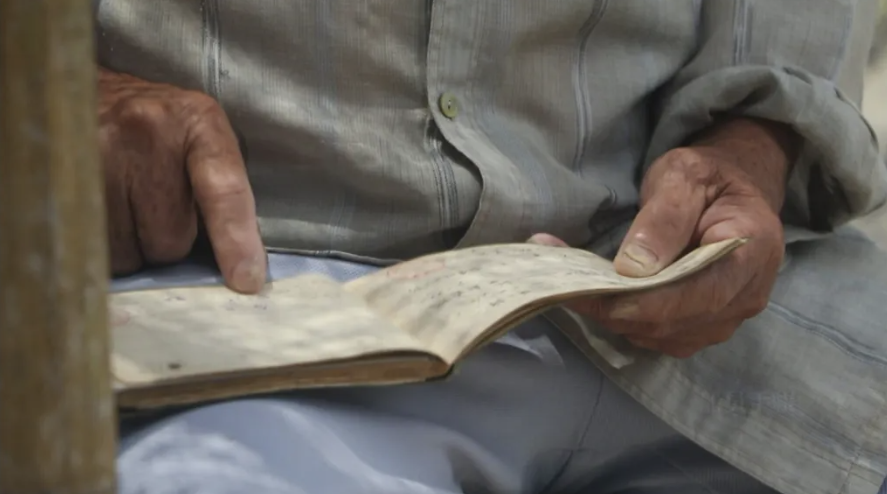
In the film, former fishing captain Katsutoshi Yamada (77 at the time) says:
“After the Bikini incident, rumors spread. People worried about how it might affect marriage and future generations.
So I tore out the 1954 pages from my seaman’s record book. I even changed my registered domicile and moved.
I never talked about the sea again.”
A seaman’s record book is like an ID that documents a sailor’s career and health.
Another woman, Etsuko Okazaki, who worked for a fishing association, recalled:
“Sometimes when we hired crew, pages were torn out of their records. We used to wonder, ‘What is this?’ Something had happened back then…”
The fishermen avoided talking about what they saw:
“The sky lit up with a flash… but even after returning to land, no one wanted to tell their families.”
Some questioned whether speaking up even mattered decades later:
“Not everyone exposed to radiation gets cancer. Some are still alive. Others died immediately—that was their fate.
So why bring up radiation now, after 60 years? What does it change?”
Kawaguchi noticed a shift:
“They had kept silent for so long, received no compensation, and yet—after seeing the fear of radiation during the Fukushima disaster—they slowly began to open up.”
A Father’s Death Reconsidered
Kawaguchi began to question her own father’s early death.
He had died of heart failure at 36, and people often said, “He drank too much.”
She was only 12 when she lost him. To support her family, she worked part-time through school.
During filming, the crew interviewed a man who had witnessed three nuclear tests—Keigo Onishi (83 at the time).
“They Took the Most Important Thing From Me”
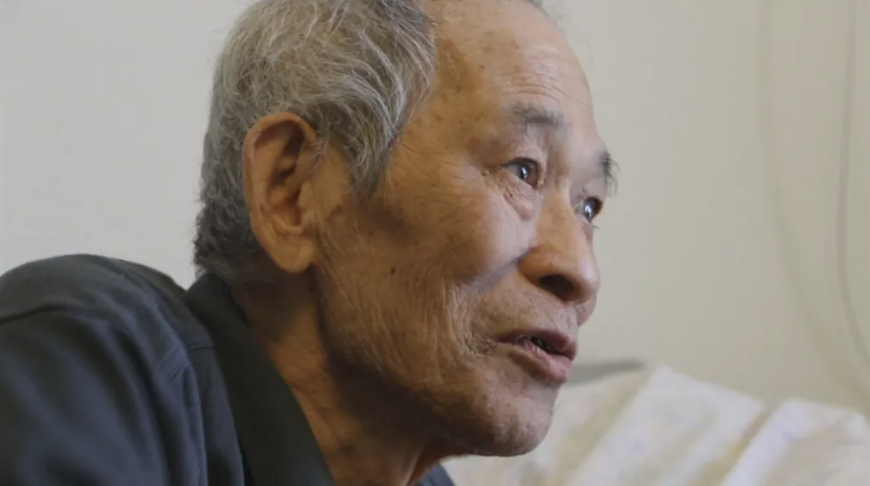
Onishi recalled:
“I heard the sound… and ash fell. My head was covered in it. Soon the sea turned black.”
He had witnessed U.S. nuclear tests in 1958 and 1962.
“A mushroom cloud appeared after sunset. I thought the sun had split apart.
But we were told, ‘Don’t say anything—fish won’t sell if you do.’
No one checked us for radiation. No one came with a Geiger counter.”
Later, he reflected:
“Maybe the cancer I was supposed to get was passed on to my son…”
His only son died of pancreatic cancer at 41.
“They took the most important thing from me… After that, my wife was never the same.”
A Discovery: Her Father’s Records
Near the end of the film, a major discovery is made:
Kawaguchi’s father’s seaman’s notebook and voyage diaries were found.
In them, he wrote about the mushroom clouds and their impact:
“Since the hydrogen bomb tests, southern fish have been contaminated. Prices have collapsed. Even risking our lives brings little profit.”
In another entry, he joyfully responds to news of his daughter’s birth:
“I’ve become a father… Name her Misa. —Father”
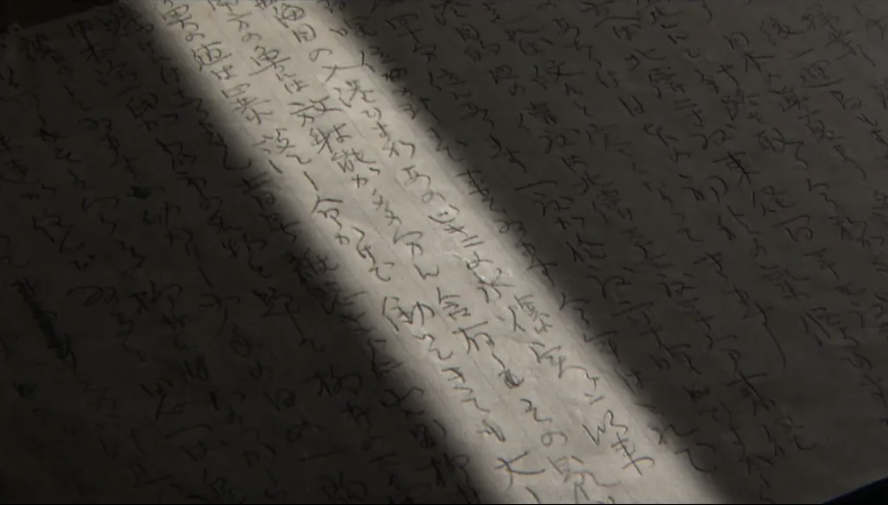
Her father’s diary revealed his deep feelings for his family and his fears about his health.”
Through these writings, Kawaguchi felt her father’s emotions across the ocean.
Later, after requesting government records, she learned that fish from her father’s vessel had been discarded due to radiation contamination.
This strongly suggested that he, too, had been exposed.
His diary also described symptoms:
“My body feels like it’s burning.”
A Story That Must Not Disappear
The film also features manga artist Masahito Daikoku (pen name Kazusaku Wake), who passed away last November. He had said:
“When I go to heaven, I’ll tell my parents about this.”
His manga X Years Later was placed in his coffin.
The traces of radiation exposure can never truly be erased.
Many fishermen lived—and died—either unaware of their exposure or forced to keep it hidden.
Kawaguchi now works to tell their stories, hoping to give voice to those regrets.
After the Screening
During the post-screening talk, audience members shared reflections and asked many questions.
The connection between Kawaguchi and the audience was deeply moving.
More than 10 years have passed since the film’s release.
Unless people continue to watch it and talk about it, these stories risk being buried again.
Independent screenings are still being held, and the hope is that as many people as possible will see it.
Written by Kumi Murata
