Fall 2025 EU Screening Tour – France 3
Continuing from the previous post, here is Part Three of the EU Screening Tour – France Edition: a report by Yuki Takahata of Yosomono Net France (reposted from Facebook).
October 20, 2025/October 21, 2025
La Flèche/Le Mans
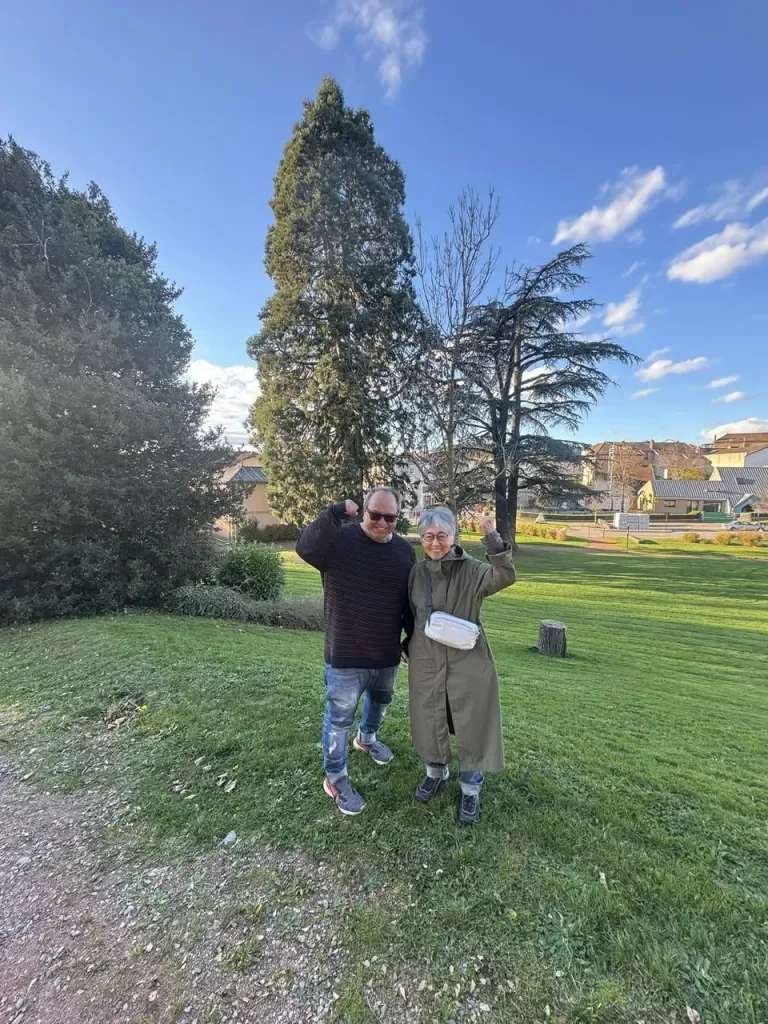
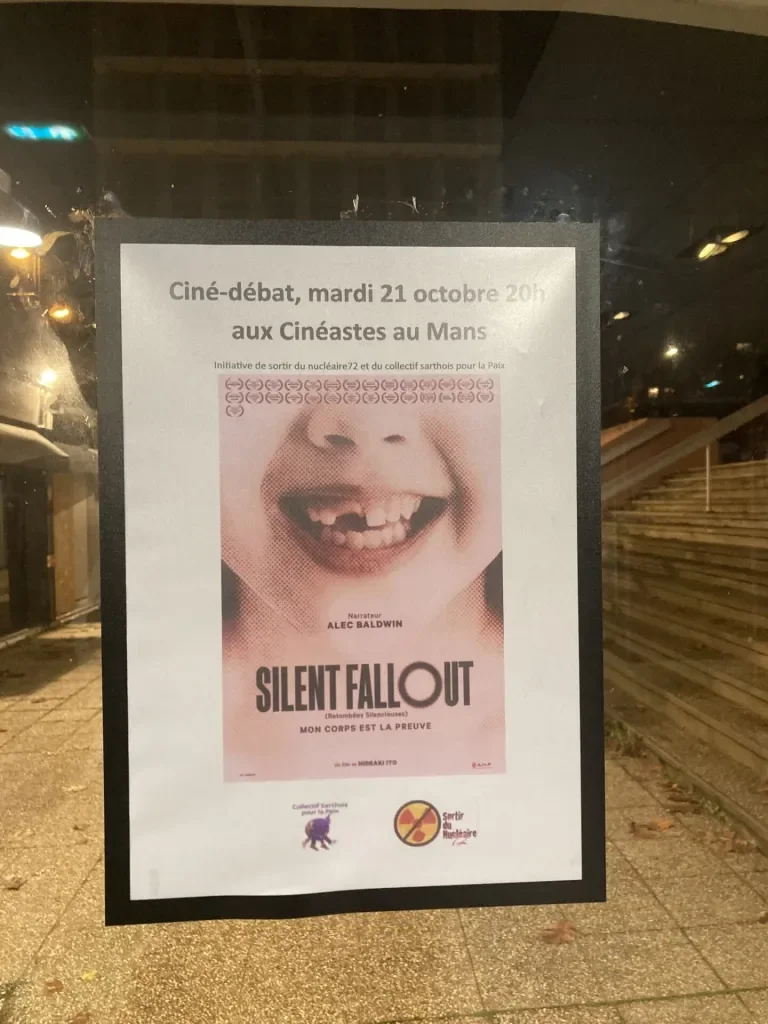
On October 20 in La Flèche and October 21 in Le Mans, Silent Fallout was screened on two consecutive evenings in the Sarthe department. The events were organized by local anti-nuclear groups, peace movements, and other citizen organizations. Since Director Ito was unable to travel to Europe, I came from Paris to the cinemas in both towns to convey his intentions.
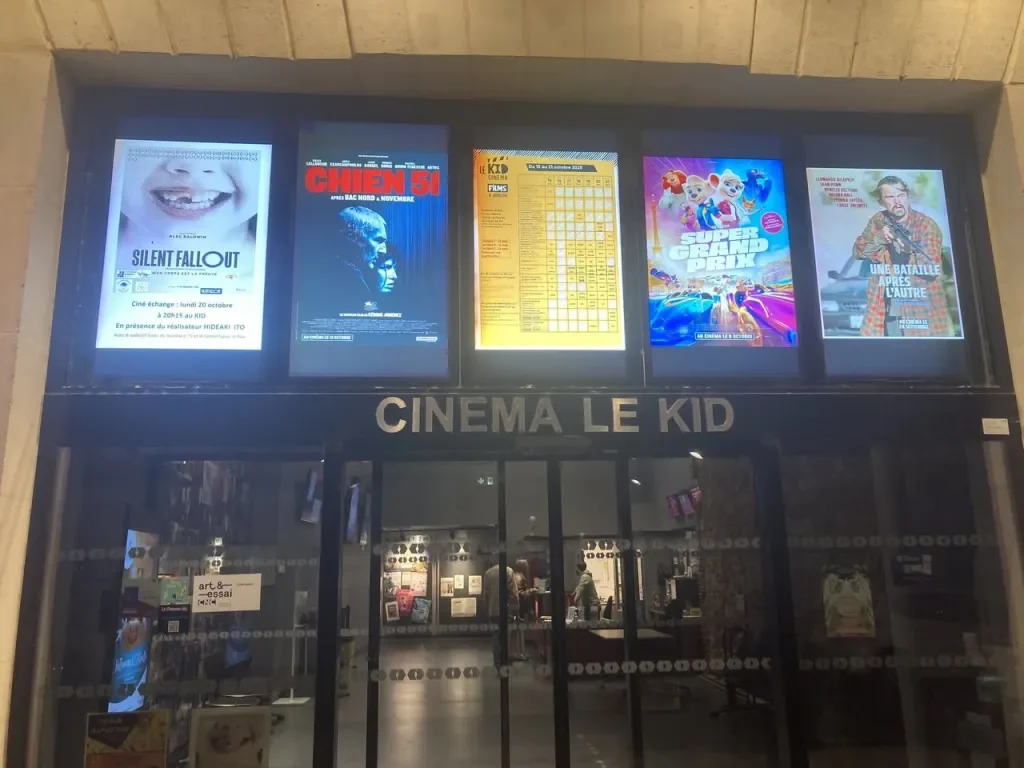
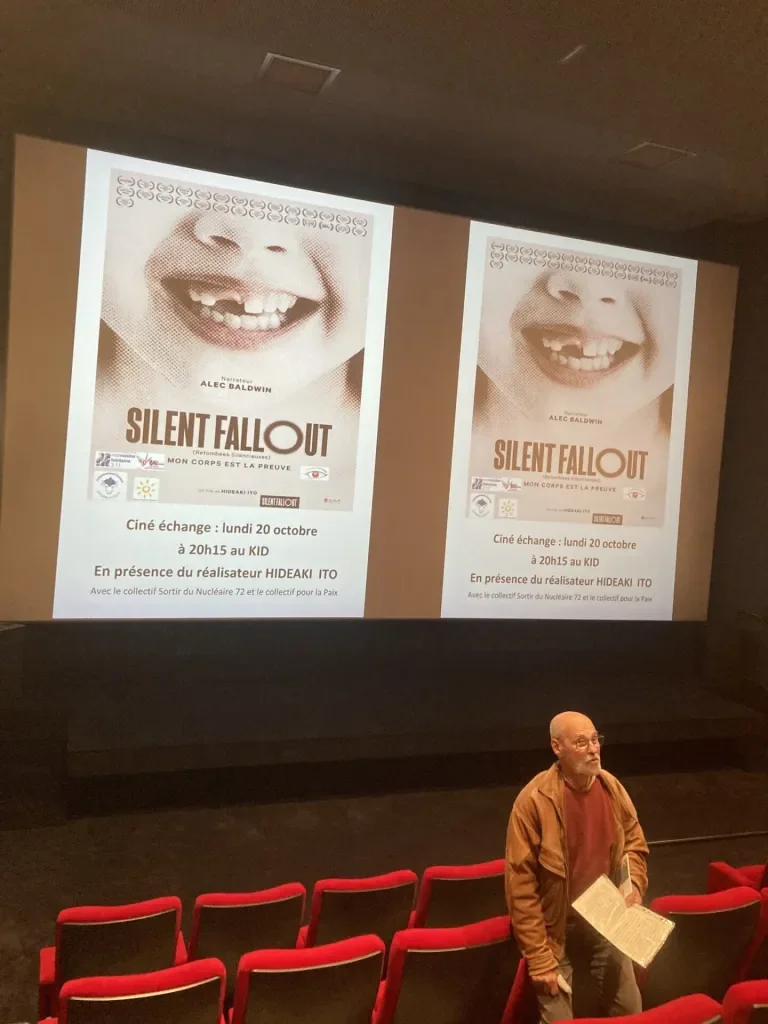
The October 20 screening took place at Le Kid cinema in La Flèche, a relatively new theater that has become popular among local residents. Attendance was just under 20 people, but the post-screening Q&A was very engaged and passionate.
At the end of the film, when it points out that “the whole world was affected by nuclear testing,” one woman in the audience reacted strongly, expressing her anger: “If we know it affects us personally, why do we continue with nuclear power?”
There was also a question about how the film has been received in the United States and whether it has secured distribution. I explained that following a series of independent screenings, a distributor has now been confirmed and the film will receive a general release starting next year.
One of the organizers noted that as compensation claims by victims in the United States have grown stronger, American and international pro-nuclear interests worked after the Chernobyl accident to minimize the perceived impact of radioactive contamination from that disaster. It was emphasized that in France as well, nuclear accidents and radiation exposure issues are consistently downplayed.
There was also a question about health effects after the Fukushima accident. I explained that the only examination conducted by the Japanese government has been thyroid screening for those who were minors living in Fukushima at the time of the accident. Even though many cancer cases have been detected, they are officially considered unrelated to the disaster. I also noted that because systematic measurement and epidemiological studies were not carried out after the accident, increases in illness or mortality cannot be statistically proven — effectively structured in such a way that proof becomes impossible.
Nearly 30 people attended the October 21 screening at an independent cinema in Le Mans. I was first asked why the director chose to make a documentary about victims of U.S. nuclear testing. I explained that he has long researched and created documentaries about the many fishing vessels affected by nuclear tests in the Pacific, not only the Daigo Fukuryu Maru (Lucky Dragon No. 5). He made this film because he wanted Americans to understand that there are victims even within the U.S. mainland.
I also emphasized the importance of women’s and mothers’ activism. In Japan, after the Lucky Dragon incident, it was housewives who initiated a petition movement against nuclear testing, which grew into a massive campaign. From that movement emerged Japan’s broader anti-nuclear movement, as well as activism by Hiroshima and Nagasaki survivors, leading to the formation of Nihon Hidankyo (Japan Confederation of A- and H-Bomb Sufferers Organizations). I pointed out that nuclear power has largely been promoted by male elite scientists and politicians, whose mindset reflected colonialism and discrimination, and who gave little thought to waste management — essentially people who do not clean up or deal with their own garbage.
There was also a question about radioactive contamination in fish. I stressed that even when radioactive substances are said to be present in small amounts, they become concentrated through the food chain.
The representative of the anti-nuclear group in Sarthe emphasized that nuclear deterrence is meaningless and criticized the government’s unilateral decision to allocate massive funds toward French rearmament. Many issues were raised, including the irrational investment of large budgets into new nuclear reactors and small modular reactors (SMRs) despite uncertain feasibility, and the vulnerability of French nuclear power plants in the face of climate change. There was also a question about depleted uranium weapons.
Some audience members expressed gratitude for being able to obtain information through screenings like this, since French media currently does not broadcast criticism of military nuclear policy or renewed nuclear power expansion. A young attendee asked how opposition movements against the drift toward war could be strengthened. A youth-led movement on this theme has emerged since last year (“guerre à la guerre,” or “war on war”), and it is hoped that it will grow significantly. Some young people said they had not known about the damage caused by nuclear testing within the U.S. mainland, and that the screening provided a valuable opportunity to deepen their understanding.
November 7, 2025
Cours-la-Ville
On Friday, a screening of Silent Fallout was held in Cours, in southeastern France.
The event was organized by Mr. Arakino, originally from French Polynesia. He is actively working for the recognition of victims and the protection of the rights of those affected by France’s nuclear testing.
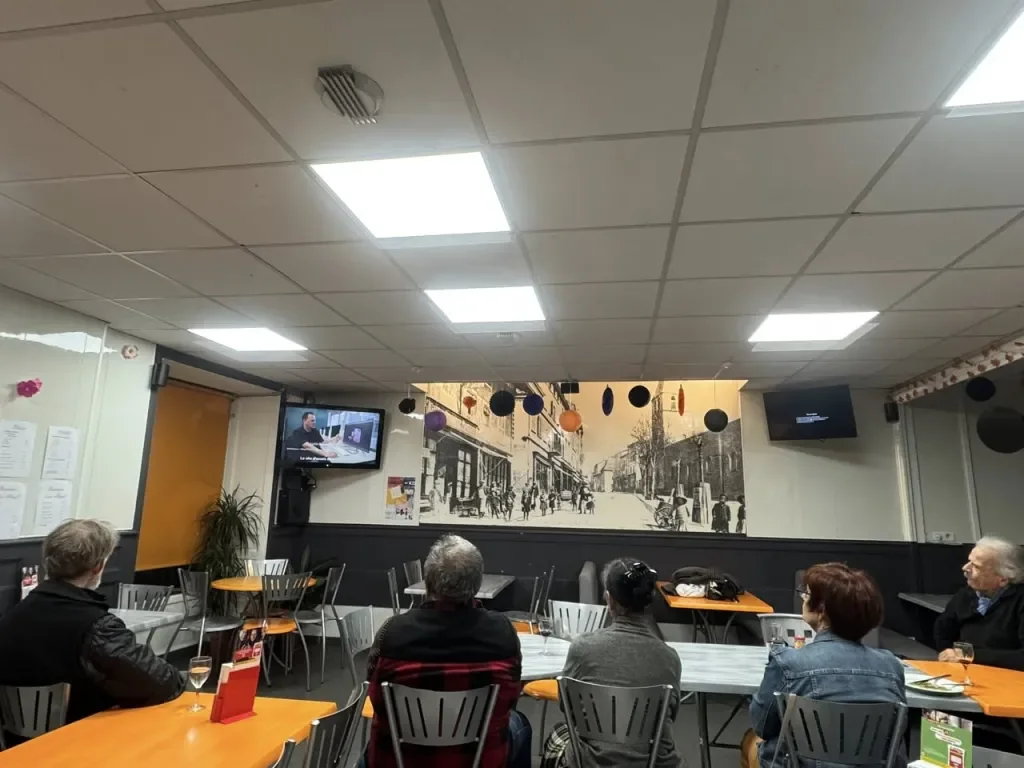
This region has a conservative political climate, where the far-right party National Rally holds strong support, making it a challenging environment for hosting screenings.
The venue was a newly opened café-bar run by Mr. Arakino himself.
This was the first time during the tour that we screened the film in a space like this, and it was quite a refreshing experience. We had previously received requests to screen the film at café-bars that serve as hubs for social activism, but this was the first time it actually came to fruition.
Although attendance was small, it felt like an important step forward for future activities.
Recently, screenings have been held in politically challenging locations — including towns with nuclear power plants and places like Cours. In towns with nuclear facilities, many residents support nuclear energy, making it very difficult to attract audiences for events like this. However, that is precisely why I believe it is meaningful to continue holding screenings there, even if they are small in scale.
There will be another screening at the end of November in Montélimar, another town with a nuclear power plant.
The next immediate screening will take place on November 12 near Grenoble.