SF Journal: The Message of the Shunkotsu Maru—Investigating While Exposed to “Nuclear Fallout”
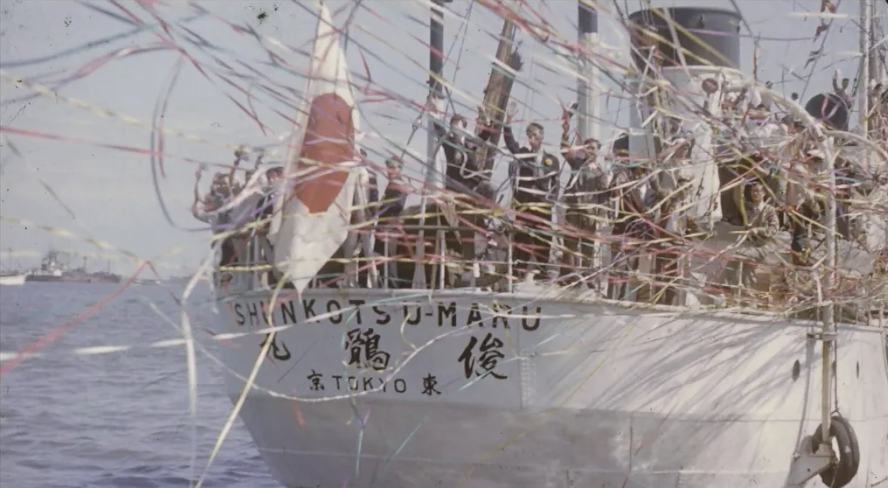
May 15 marks the anniversary of the departure of the oceanographic research vessel Shunkotsu Maru, whose 51-day voyage was later featured in the documentary film X Years After Exposure to Radiation.
The United States conducted numerous nuclear tests in the Pacific Ocean during the Cold War. Among them, the Bravo test on March 1, 1954—the test that exposed the crew of the Japanese fishing boat Daigo Fukuryū Maru (Lucky Dragon No. 5) to radioactive fallout—was far more powerful than previous detonations.
Despite this, Lewis Strauss, chairman of the U.S. Atomic Energy Commission, denied that fish and seawater had been contaminated. The Japanese government, meanwhile, showed little willingness to hold anyone accountable for the hydrogen bomb tests.
As fears spread and radioactive tuna became stigmatized as “A-bomb tuna,” fish markets and sushi restaurants across Japan faced the threat of closure. It was officials from Japan’s Fisheries Agency who stepped forward to investigate. Because tuna was an important export product, they understood the potential economic and social consequences.
Later, meteorologist Yasuo Miyake, then director of the Meteorological Research Institute, wrote in his book Scientists Fighting Nuclear Fallout:
“The U.S. government seriously underestimated the incident. Therefore, if compensation was to be demanded for the victims aboard the Lucky Dragon No. 5 and for the enormous losses suffered by the fishing industry, it was essential to present irrefutable evidence obtained through on-site investigation.”
With that goal in mind, a team of 22 scientists specializing in fisheries science, radiological science, meteorology, oceanography, and medicine—along with members of the press—embarked on a research voyage aboard the Shunkotsu Maru from May 15 to July 4, 1954.
Discovering Biological Magnification in the Ocean
The Shunkotsu Maru accomplished many things during its mission. One of its most significant achievements was becoming the first research expedition in the world to demonstrate biological magnification—the process by which radioactive substances become increasingly concentrated as they move up the marine food chain.
In a June 5, 2008 interview with filmmaker Hideaki Ito, fisheries researcher Misao Honma recalled how the team caught tuna and other fish using longline fishing methods. After dissection, radiation levels were measured in muscle tissue, skin, and individual organs.
One skipjack tuna liver was found to contain an astonishing 48,000 counts per minute (cpm) of radioactivity.
Radioactive Materials Do Not Simply “Dilute Away”
Another important lesson emerged from the expedition.
As Miyake emphasized in his writings, radioactive materials do not simply disappear by being diluted in seawater.
Although the ocean contains an immense volume of water, averaging about 3,800 meters in depth, seawater is stratified according to density. Denser water lies beneath lighter water, creating stable layers that do not easily mix.
Many people assume that waste dumped into the ocean quickly becomes harmless because of the vast quantity of water. Miyake argued that this assumption is fundamentally mistaken. Different masses of seawater form a mosaic-like structure separated by density boundaries, and even horizontal mixing occurs far more slowly than most people imagine. Ocean currents flow through these water masses like rivers, carrying substances great distances while keeping them relatively concentrated.
The expedition found that radioactive materials released near Bikini and Enewetak Atolls had formed a narrow belt roughly 100 meters deep and ranging from several dozen to several hundred kilometers wide. Most of this radioactive water mass drifted slowly westward.
Radioactive contamination was readily detected even more than 1,000 kilometers from the test sites.
Sailing Toward Ground Zero, Knowing the Risks
Another aspect of the story that caught my attention concerns the health of the crew themselves.
According to interview notes recorded by director Hideaki Ito in May 2008 during a conversation with Shinji Okano, those aboard the Shunkotsu Maru knowingly sailed toward the center of contamination, fully aware of the risks of radiation exposure.
Interview conducted in Kamakura, Kanagawa Prefecture, May 1, 2008
Ito: How contaminated was the seawater encountered by the Shunkotsu Maru?
Okano: That's difficult to compare. What would be the best example?
Ito: Perhaps the JCO nuclear accident, or the radiation from Hiroshima and Nagasaki?
Okano: It was far greater than that. Not even close.
Ito: How should we understand the scale?
Okano: Chernobyl is in a category of its own, of course. But as we sailed across the ocean, there were measurable radiation levels everywhere. Some deep-sea hydrothermal areas naturally have elevated radioactivity, but the contamination we encountered was substantial.
Ito: Could the radiation exposure experienced by fishermen operating in those waters be compared to Hiroshima?
Okano: Not really. The scale is different. Radiation decreases over time. Right after Hiroshima, the levels were extremely high, but they declined rapidly. Around Bikini, some radioactive materials decayed quickly, while others remained and continued emitting radiation.
Ito: If a tuna fishing vessel continued operating in those waters for weeks, would the crew be exposed to radiation?
Okano: During the tests, radioactive fallout was literally falling from the sky.
Ito: How serious would that exposure have been?
Okano: People from the Lucky Dragon incident died. We were operating right on the edge. In that sense, it's remarkable that no one aboard died immediately, but exposure at those levels certainly had consequences.
Ito: Serious enough to affect human life?
Okano: Serious enough to have a clear impact on the body.
Remembering What Was Learned
The findings gathered by these scientists—many of whom risked their own health in the process—were eventually compiled into official reports.
As the years pass, these events inevitably fade from public memory. Yet the story of the Shunkotsu Maru reminds us of the human cost associated with the development and testing of nuclear weapons.
It is a history that deserves continued examination, not only for what it reveals about the past, but for the questions it raises about responsibility, science, and the consequences of nuclear power in our world today.